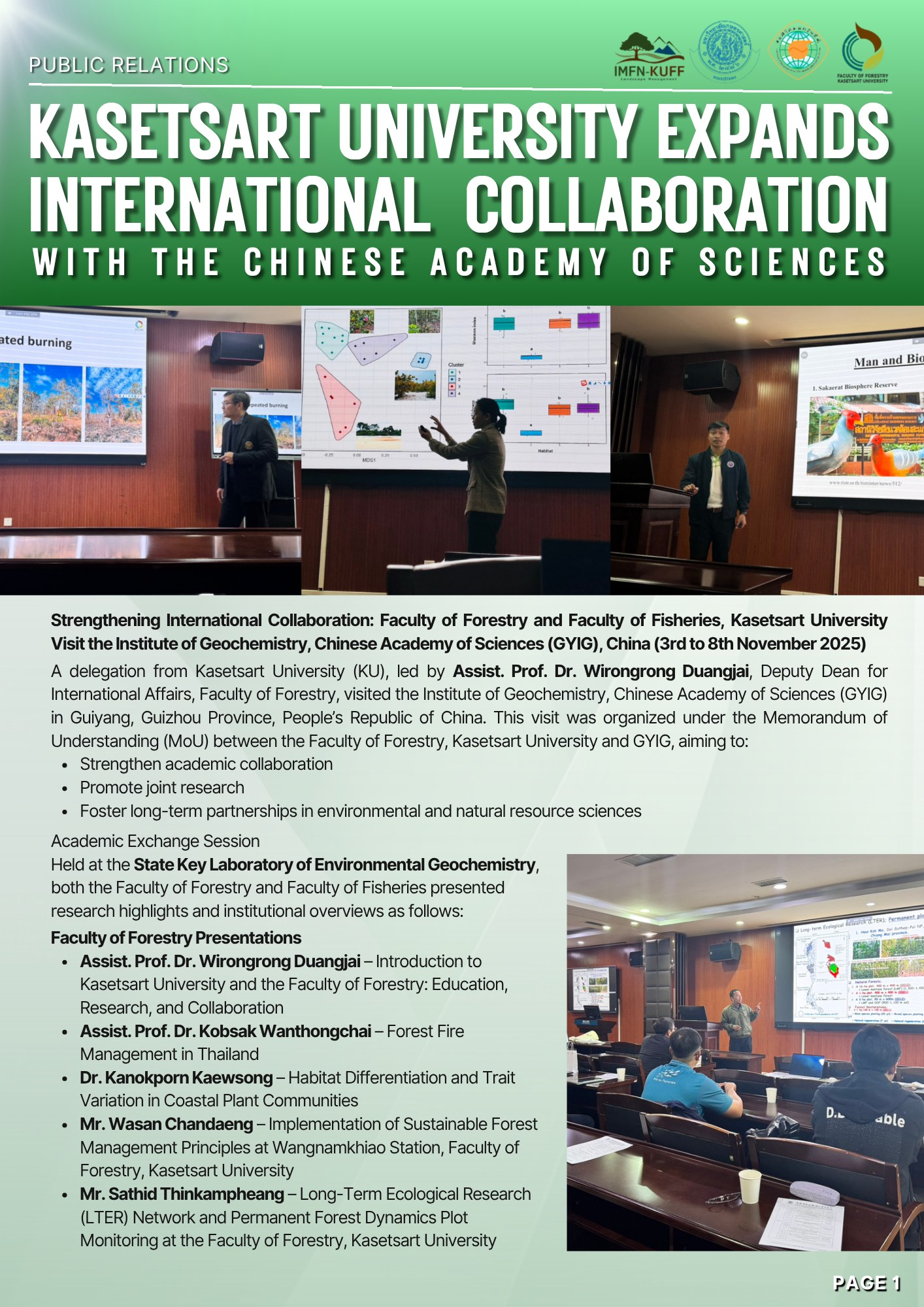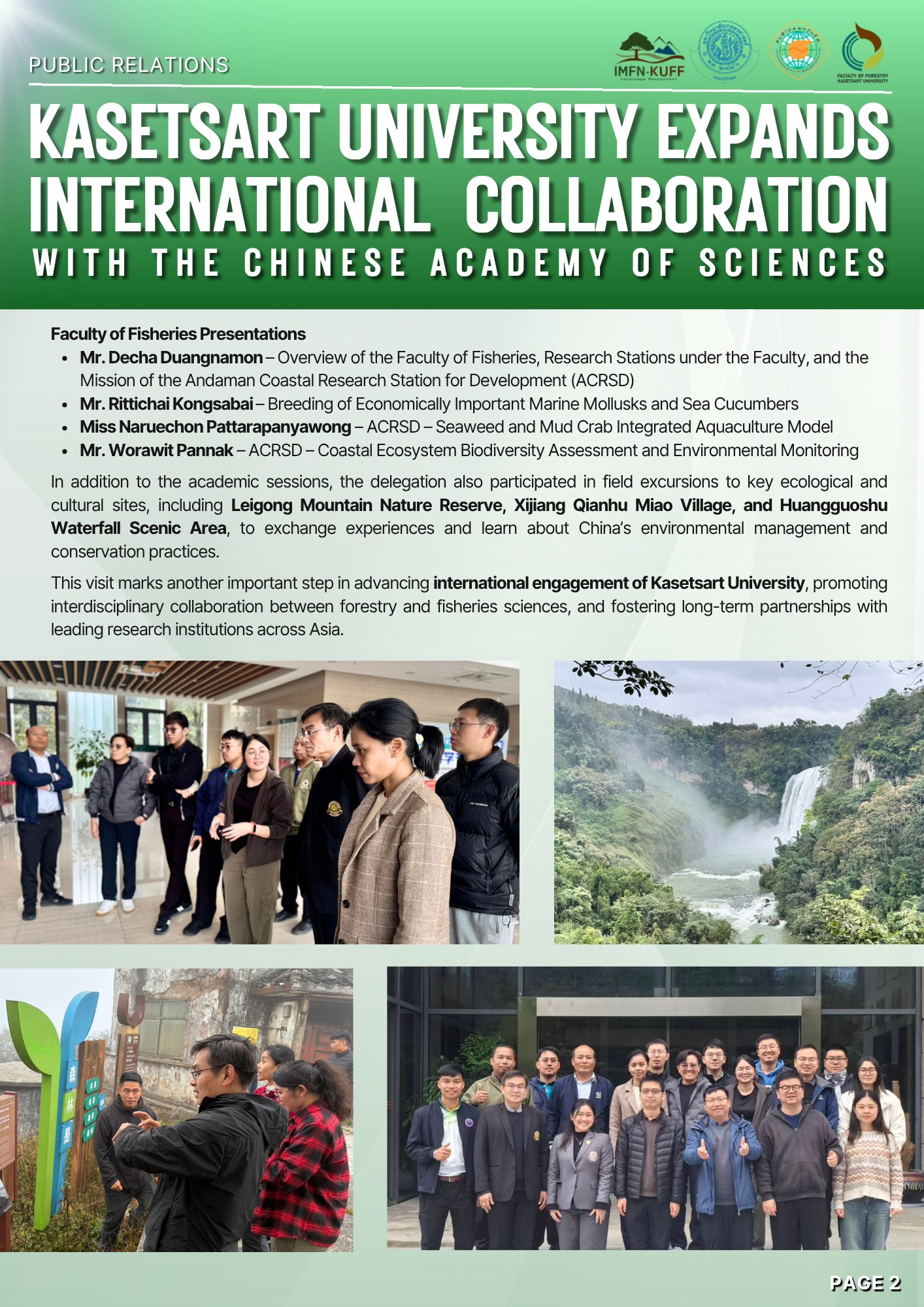

Kasetsart University Expands International Collaboration with the Chinese Academy of Sciences
The Faculty of Forestry and the Faculty of Fisheries, Kasetsart University, visited the Institute of Geochemistry, Chinese Academy of Sciences (GYIG) in Guiyang, Guizhou Province, People’s Republic of China, from 3–8 November 2025. The visit was organized under the Memorandum of Understanding (MoU) between the Faculty of Forestry and GYIG to strengthen academic collaboration, promote joint research, and enhance long-term partnerships in environmental and natural resource sciences.
The delegation was led by Assist. Prof. Dr. Wirongrong Duangjai, Deputy Dean for International Affairs, Faculty of Forestry. Representatives from both the Faculty of Forestry and the Faculty of Fisheries participated in academic exchanges at the State Key Laboratory of Environmental Geochemistry, where they presented research highlights and shared knowledge in forestry, fisheries, and environmental studies.
Key presentations from the Faculty of Forestry included:
– Introduction to Kasetsart University and the Faculty of Forestry
– Forest Fire Management in Thailand
– Habitat Differentiation and Trait Variation in Coastal Plant Communities
– Implementation of Sustainable Forest Management Principles at Wangnamkhiao Station
– Long-Term Ecological Research (LTER) Network and Permanent Forest Dynamics Plot Monitoring
Presentations from the Faculty of Fisheries covered:
– Overview of the Faculty of Fisheries and its research stations
– Breeding of marine mollusks and sea cucumbers
– Integrated aquaculture model for seaweed and mud crab (ACRSD)
– Coastal ecosystem biodiversity assessment and environmental monitoring
The delegation also joined field excursions to Leigong Mountain Nature Reserve, Xijiang Qianhu Miao Village, and Huangguoshu Waterfall Scenic Area, gaining valuable insights into China’s natural resource management and conservation practices.
This visit represents an important milestone for Kasetsart University in advancing international engagement and fostering interdisciplinary collaboration between forestry and fisheries. It further strengthens the university’s commitment to promoting sustainable development of natural resources and the environment.